The hospitality industry has moved a long way from phone bookings, handwritten reservation books, and manual availability checks. Today, reservation systems are becoming intelligent ecosystems that connect guests, accommodation providers, payment systems, marketing tools, and personalised experiences into one smoother process.
For hotels, guest houses, lodges, B&Bs, and self-catering properties, this shift is not only about using newer software. It is about reducing friction for guests, improving operational accuracy, and giving accommodation businesses better control over bookings, communication, pricing, and direct revenue.
Key takeaways
- Reservation systems are evolving from booking records into connected hospitality platforms.
- AI, automation, voice search, guest profiles, and dynamic pricing will shape future booking experiences.
- The best technology will make travel decisions easier without removing the human touch from hospitality.
From traditional booking tools to intelligent platforms
Traditional reservation systems were mainly designed to record bookings and show whether rooms were available. They helped properties move away from paper-based processes, but many still operated as isolated tools.
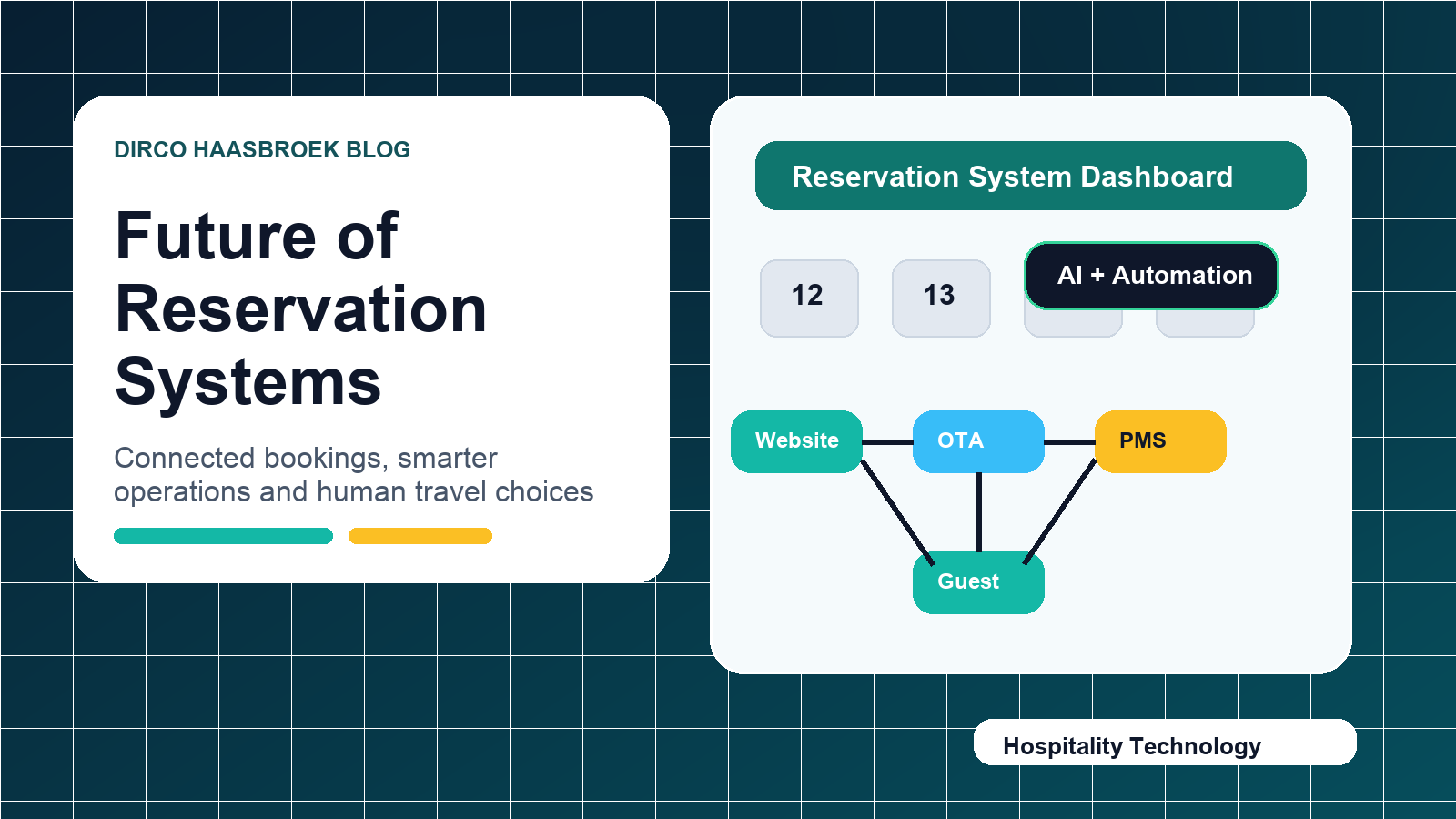
Modern reservation systems are far more powerful. A good setup may include an online booking engine, channel manager, payment processing, guest messaging, customer relationship management, reporting, analytics, marketing automation, and links into a property management system.
It is useful to separate three common terms. A property management system helps manage daily operations such as rooms, guests, housekeeping, billing, and front-desk workflows. A booking engine lets guests book directly on a website. A channel manager keeps rates and availability in sync across platforms such as OTAs and travel marketplaces.
The future is not one of these tools working alone. It is a connected environment where availability, rates, guest data, payments, and communication stay aligned automatically.
Artificial intelligence and smarter booking recommendations
Artificial intelligence is likely to play a major role in future reservation systems. Instead of expecting guests to search through hundreds of options manually, AI-assisted systems can help narrow choices based on context and preference.
A future booking platform may suggest accommodation based on previous travel behaviour, predict guest preferences, recommend room upgrades, suggest local activities, create personalised packages, and answer common questions through intelligent assistants.
For example, if a family often books pet-friendly accommodation with a swimming pool, the system can prioritise similar properties in future searches. If a business traveller usually arrives late and prefers fast check-in, the system can highlight properties that support digital check-in and after-hours access.
The booking process then becomes less about endless searching and more about receiving useful, relevant suggestions.
Voice-based reservations
Voice technology is also becoming more common. In future, a guest may simply say: “Book me a beachfront guesthouse in Cape Town for two nights under R2,000 per night.”
A connected reservation system could search available properties, compare prices, suggest suitable options, complete payment, and send confirmation instantly. This could be especially useful on mobile devices, in-car assistants, and smart home devices where typing is inconvenient.
For accommodation providers, this means property data, rates, policies, and availability need to be accurate and machine-readable. If systems cannot understand the product clearly, they cannot recommend it confidently.
Personalised guest profiles
Future reservation platforms will likely build more detailed guest preference profiles. These may include room preferences, dietary requirements, favourite activities, preferred check-in times, language preferences, travel patterns, accessibility needs, and special occasions.
Used responsibly, this information can help accommodation providers create better guest experiences. A returning guest may automatically receive their preferred room type, relevant breakfast options, a personalised welcome message, or local activity suggestions that match previous interests.
Personalisation can improve satisfaction and encourage repeat bookings, but it must be balanced with privacy, consent, and clear data practices.
Dynamic pricing becomes more accessible
Many hotels already use dynamic pricing, but future systems will make pricing intelligence more accessible to smaller accommodation businesses. Pricing may adjust based on demand patterns, local events, weather, flight availability, competitor rates, historical booking behaviour, and seasonal trends.
For independent guest houses and lodges, this can be valuable. Instead of relying only on fixed seasonal rates, properties can respond more quickly to demand and improve occupancy without constantly checking spreadsheets or competitor websites.
The goal should not be confusing guests with unpredictable pricing. The goal is to price more intelligently while keeping the booking experience clear and trustworthy.
Contactless and frictionless guest journeys
Modern travellers increasingly value convenience. Future reservation systems will support more frictionless journeys before, during, and after the stay.
- Before arrival: digital check-in, online identity verification, mobile payments, and automated pre-arrival communication.
- During the stay: digital room keys, in-app service requests, AI concierge assistance, and faster support.
- After departure: automatic invoices, feedback requests, personalised offers, and loyalty communication.
In many cases, guests may complete an entire stay without standing in a reception queue. That does not mean service disappears. It means staff can spend less time on repetitive admin and more time helping guests when it matters.
Integration will become the real advantage
The strongest reservation systems will act as central hubs that connect multiple technologies. These may include payment gateways, property management systems, smart room technology, marketing platforms, guest messaging tools, travel platforms, transportation services, and loyalty programmes.
This matters because many operational problems come from disconnected systems: availability that is not updated quickly enough, overbookings, fragmented guest data, manual replies, inconsistent rates, and weak reporting.
When systems work together, accommodation providers can reduce errors and create a more consistent guest experience across direct bookings, OTAs, email, WhatsApp, and on-property service.
Predictive reservation systems
The next step is prediction. Future systems may suggest annual holiday destinations based on previous trips, recommend upgrades that a guest is likely to accept, predict cancellation risks, and forecast occupancy months in advance.
For hospitality businesses, predictive tools can improve planning, staffing, stock control, marketing timing, and revenue management. Instead of reacting only after bookings happen, operators can prepare earlier and make better decisions.
Common mistakes accommodation businesses should avoid
- Choosing software only for price without checking integrations and support.
- Allowing guest data to become fragmented across too many platforms.
- Ignoring direct-booking conversion while relying too heavily on OTAs.
- Automating messages without keeping them warm, clear, and helpful.
- Collecting guest data without a clear privacy and security process.
Challenges for future reservation systems
Technology brings opportunities, but it also introduces responsibilities. Data privacy, cybersecurity, staff training, system integration, reliability, and overdependence on automation all need careful attention.
Hospitality is ultimately about people. Technology should enhance service, not remove the personal care that makes a stay memorable. The best reservation systems will support the human side of hospitality by making the operational side easier.
Conclusion
The future of reservation systems is moving toward intelligent, automated, and personalised booking experiences. Reservation platforms will continue evolving from simple booking tools into complete hospitality ecosystems that understand guest behaviour, improve operational efficiency, and support better business decisions.
Businesses that adopt these technologies thoughtfully can gain advantages through better guest experiences, increased efficiency, stronger direct bookings, and improved customer loyalty.
While technology will continue changing how reservations work, one thing remains constant: guests value convenience, trust, and exceptional service. Travel will always be a personal choice; technology simply helps make that choice easier.
Frequently asked questions
What is the future of reservation systems in hospitality?
Reservation systems are moving from simple booking records to connected platforms that manage availability, payments, guest communication, pricing, reporting, and personalised guest experiences.
Will AI replace human service in hospitality bookings?
AI will not replace hospitality service. Its best role is to reduce repetitive work, answer common questions faster, and help guests make better booking decisions while staff focus on personal service.
Why are integrations important for modern reservation systems?
Integrations allow booking engines, payment gateways, channel managers, property management systems, guest messaging tools, and marketing platforms to work together instead of creating disconnected data silos.
Related reading
- The Future of Reservation Systems: Smarter Bookings for Hotels and Guest Houses
- Why Direct Bookings Matter for Hotels and Guest Houses
- JSON-LD Schema for Hotels: A Simple Guide for Hotel Website Owners