

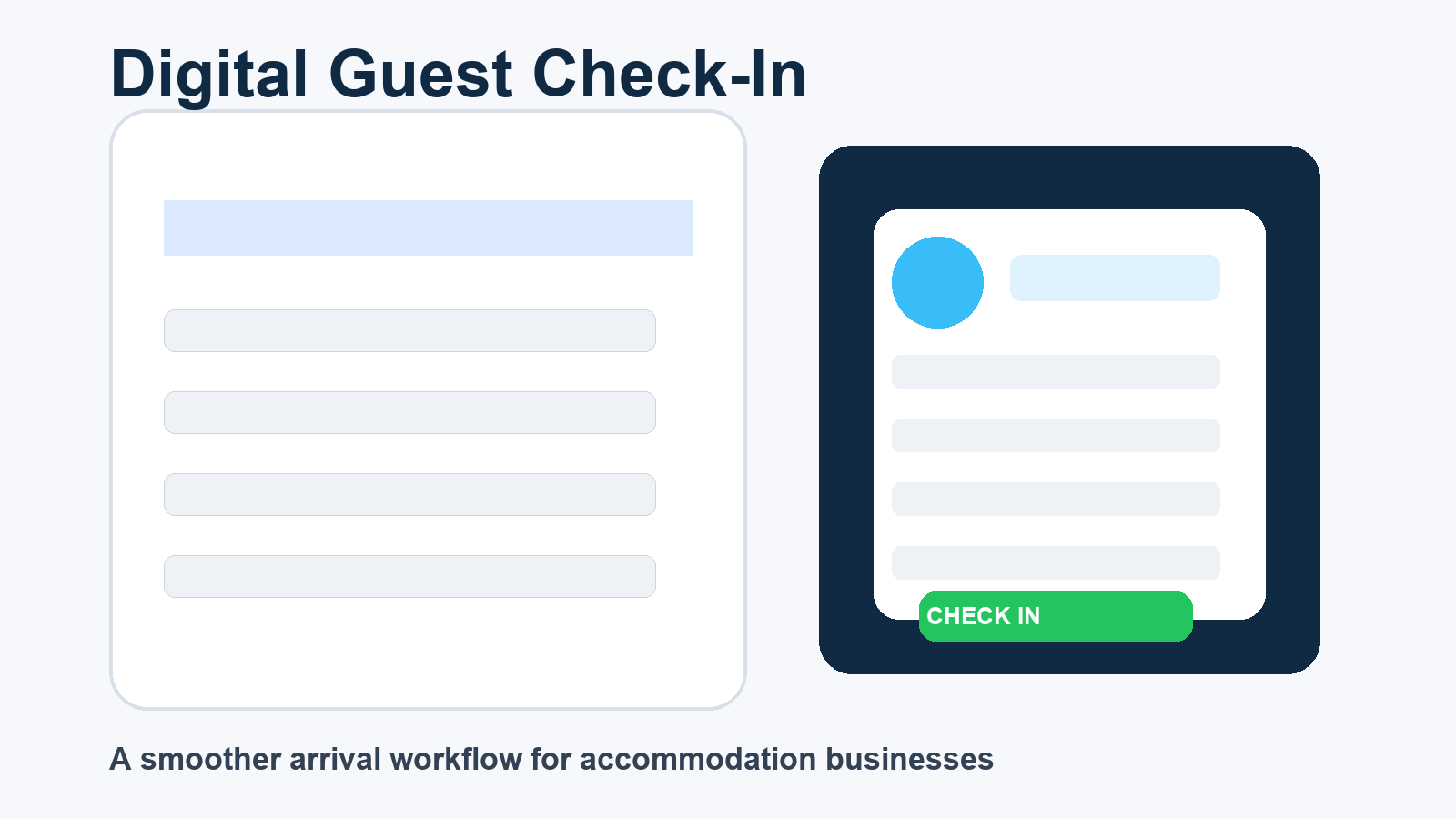
For many accommodation businesses, check-in still depends on printed forms, WhatsApp messages, ID copies, last-minute arrival questions and a receptionist trying to keep everything organised during the busiest part of the day. That is exactly why digital guest check-in has become such a useful search topic for hotels, guest houses, lodges and self-catering properties.
The point is not to make hospitality feel less personal. The point is to remove avoidable admin so that the human part of the stay can be better. Travel will always be a personal choice; technology should simply make the journey smoother for both the guest and the property.
Key takeaways
- Digital guest check-in works best when it is part of the full arrival workflow, not just a form on a website.
- The data you capture should be useful, legally justifiable and easy for staff to act on.
- A good online check-in process can reduce reception pressure, improve arrival communication and support better direct booking relationships.
- Guest trust matters: explain why you need the information and avoid asking for unnecessary personal data.
What digital guest check-in actually means
Digital guest check-in is the process of collecting and confirming key arrival information before the guest physically checks in. It can be as simple as a secure online form, or as advanced as a connected workflow that updates your PMS, sends WhatsApp arrival instructions, notifies housekeeping and records marketing consent.
For a small guest house, the first version might only replace a paper registration form. For a larger property, it may become part of a wider guest communication system. The best approach depends on the size of the operation, the type of guests, the booking channels used and how much automation the team can realistically maintain.
Why accommodation owners are searching for it
The keyword is strong because it sits at the intersection of several real problems: guest convenience, staff efficiency, data accuracy, arrival anxiety, OTA dependency and direct booking growth. Owners are not only looking for software. They are looking for a better way to manage the moment between booking and arrival.
That moment matters. If the guest has to repeat information, ask for directions, send documents manually and wait for replies, the experience feels messy before the stay has even started. If the property receives clean information early, the arrival feels calmer and more professional.
What a good digital check-in should capture
A digital check-in form should be short enough for guests to complete, but useful enough for the property to act on. Common fields include guest name, contact number, email address, reservation reference, expected arrival time, number of guests, vehicle details where relevant, ID or passport details where required, special requests and acceptance of house rules.
Properties should also think carefully about consent. If you want to send future offers, request permission clearly. Do not hide marketing consent inside general check-in wording. Clean consent is better for trust, better for compliance and better for long-term guest relationships.
How it improves the guest journey
Guests do not mind sharing information when the benefit is clear. If digital check-in leads to faster arrival, clearer parking instructions, smoother access, fewer repeated questions and better communication, it feels helpful rather than intrusive.
For self-catering properties and smaller establishments, digital check-in can be especially useful because the owner or manager may not always be at the front desk. Arrival instructions, gate codes, directions, Wi-Fi details and emergency contact information can be sent in a structured way instead of being buried in scattered messages.
How it supports direct bookings
Digital guest check-in is also a data-quality opportunity. OTA bookings often limit how much of the guest relationship belongs to the property. A check-in workflow can help build a cleaner first-party guest record, provided the guest understands what they are agreeing to.
That does not mean spamming past guests. It means being able to send useful post-stay messages, request reviews, offer return-stay incentives and understand repeat-guest patterns. Direct bookings are not won through one tactic; they are built through many small trust points. Digital check-in can be one of those points.
Common mistakes to avoid
- Asking for too much information before explaining why it is needed.
- Using a generic form that does not match the property’s real arrival workflow.
- Collecting marketing consent in a vague or bundled way.
- Forgetting mobile usability, especially for guests completing the form while travelling.
- Sending check-in links too late, when the guest is already on the road.
- Not telling staff what to do with the information once it arrives.
A practical workflow for smaller properties
A simple implementation can start with a secure form linked from the booking confirmation email. The form should confirm the reservation, collect arrival details, ask only for required information, and trigger a staff notification once submitted. The guest should then receive a clear confirmation message with the next practical step.
Once that works reliably, the property can add layers: automatic reminders, segmented messages, post-stay follow-ups, review requests, repeat-stay offers and better reporting. The mistake is trying to build the whole automation system before the basic check-in workflow is trusted by staff and guests.
SEO opportunity for hospitality websites
From an SEO point of view, “digital guest check in” is valuable because it has commercial and operational intent. The person searching may be comparing tools, trying to modernise a property, or looking for best-practice guidance before choosing a system. A hospitality website that explains the topic clearly can attract the right type of owner or manager.
This is also a good example of content that can lead into practical services: form design, website integration, CRM workflows, WhatsApp automation, reservation-system integration and direct-booking strategy. The content should educate first, then make the next step obvious.
Related reading
- Digital Guest Check-In Forms: What to Capture and How to Use the Data
- Every Stay Can Become Content
- Google Preferred Sources and Hospitality Websites
Frequently asked questions
What is digital guest check-in?
Digital guest check-in is an online arrival process where guests submit required details, confirm stay information and receive arrival instructions before they reach the property.
Is digital guest check-in only for hotels?
No. Guest houses, lodges, B&Bs, self-catering units and Airbnb-style properties can all use a simple digital check-in workflow if it matches their operations.
Can digital check-in help with direct bookings?
Yes, when consent is handled properly. It gives the property cleaner guest data, better communication timing and more opportunities to build future guest relationships outside the OTA inbox.
Final thought
Digital guest check-in is not just a software feature. It is a better way to handle a critical hospitality moment. When it is designed around the guest journey, staff workflow and responsible data use, it can make arrivals calmer, communication clearer and future direct-booking relationships stronger.